




When the product page is not enough
Most e-commerce products can live on a standard product page. A photo, a description, a size selector, an add-to-cart button. That setup works until the product itself stops being simple.
When complexity becomes friction
Some products cannot be reduced to a dropdown. A glass sliding wall measured to the millimeter. A made-to-measure shirt configured across fabric, collar, cuff, and monogram. A professional print order spanning format, material, size, lamination, and quantity. In each of these cases, a standard product page does not just underperform. It actively gets in the way.
The customer arrives with intent and leaves without buying, not because the product is wrong for them, but because the experience of choosing it is too hard. The friction is not in the product. It is in the interface.
A well-built product configurator removes that friction entirely. It turns a complex decision into a guided process, updates the price and visual output in real time, and gets the customer to checkout with full confidence in what they are ordering.
We have built enough of them to know that this is not a minor UX improvement. It is a structural change in how a product sells.
Three projects, three different problems
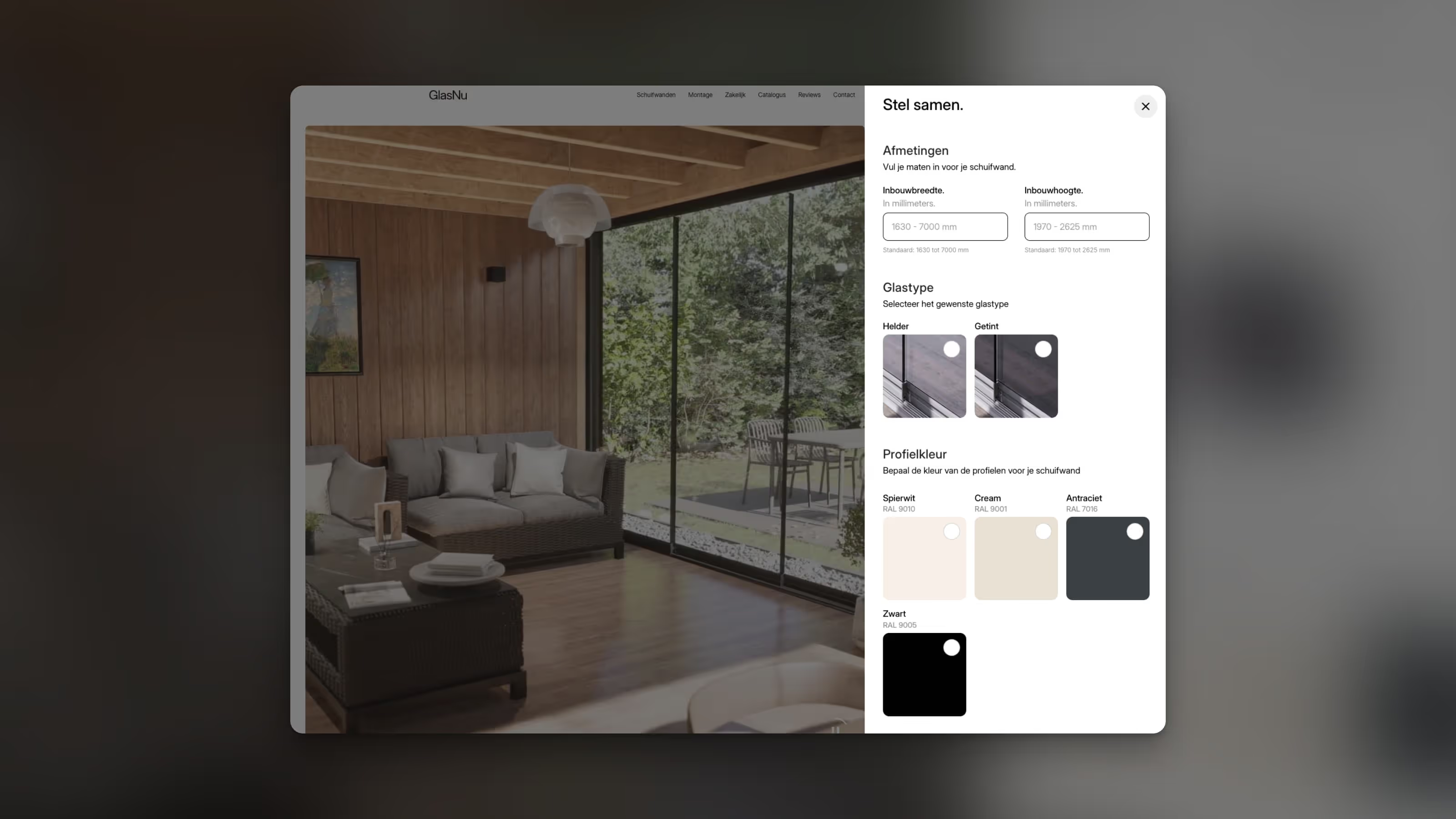
GlasNu is a Dutch company specialising in premium glass sliding walls for verandas, terraces, and interior spaces. Every order is unique: width up to 7 meters, multiple rail configurations, glass specifications, profile finishes, installation variables. Selling a product of this technical complexity through a standard e-commerce flow was not viable. We designed and built a fully custom configurator natively on Shopify, handling the entire commerce logic beneath it. Each selection updates the product, price, and visual output in real time. GlasNu customers can now configure, price, and order a fully custom glass sliding wall entirely on their own, without friction, without a quote request, without a showroom visit. The store operates with a 4.7 Trustpilot rating and same-day order processing.
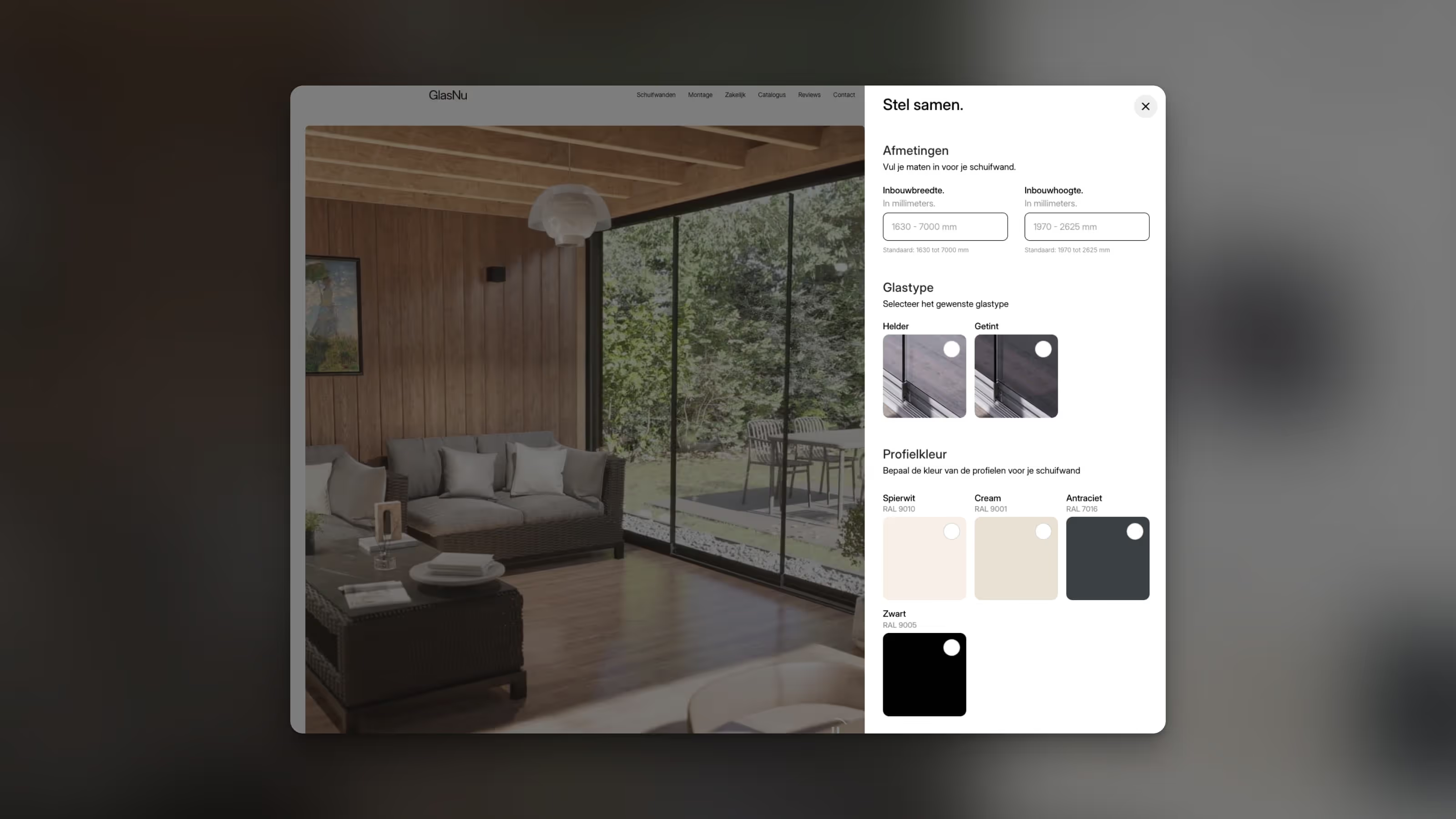
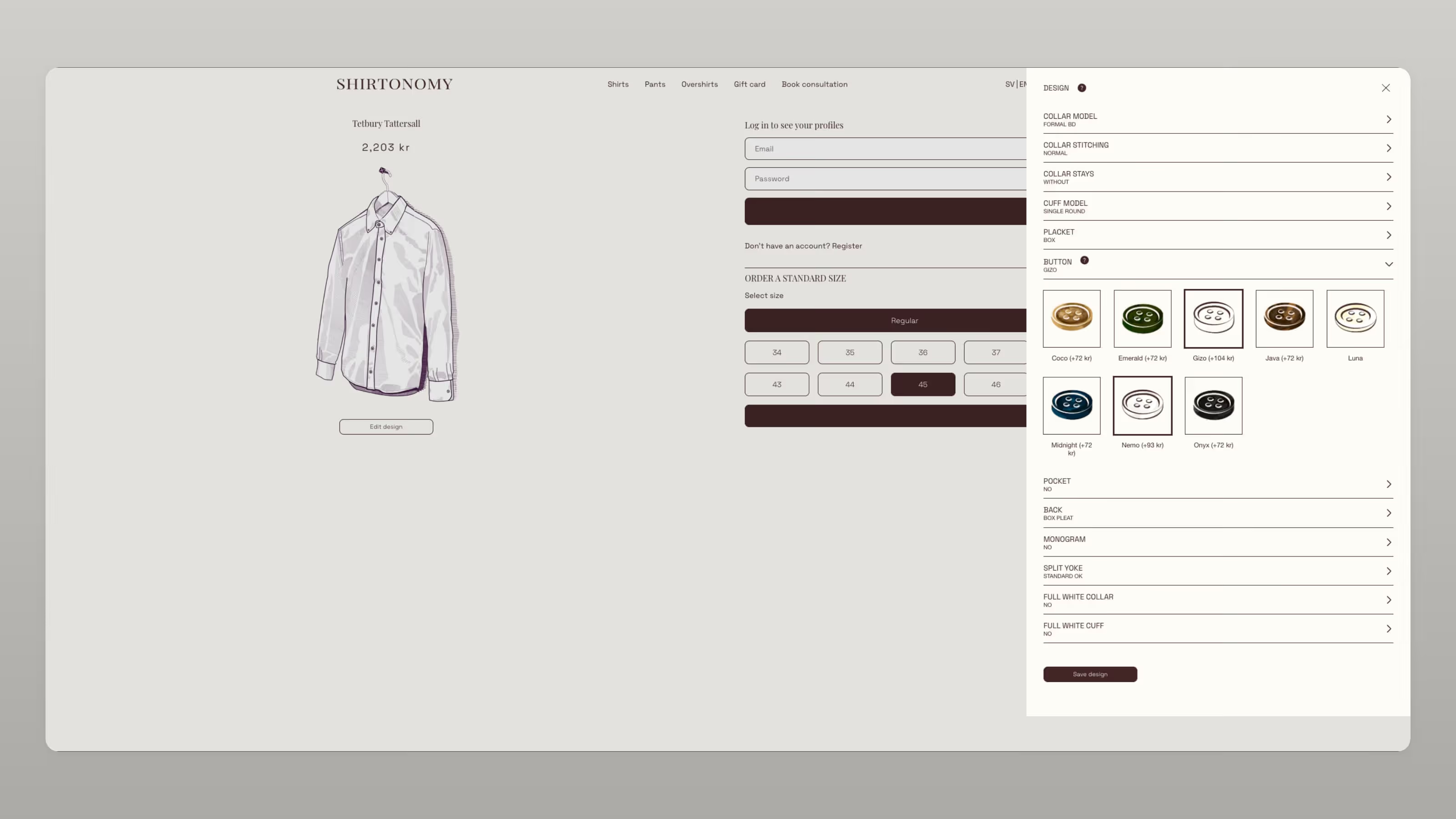
Shirtonomy is a Swedish premium shirtmaker offering made-to-measure shirts crafted from fabrics woven in Portugal's historic textile region. The challenge was translating an atelier experience into an online flow without losing any of the detail that defines the brand. The configurator we built on Shopify guides customers step by step through fabric, fit, collar style, cuff type, buttons, and monogram options, with each selection updating the product in real time. A purchase that would traditionally require a physical consultation is now fully self-serve, with every variable intact.
PosterAmsterdam is a Dutch professional print company producing high-quality posters entirely in-house, with same-day dispatch across Europe. Their challenge was different: not the complexity of a single configurable product, but the breadth of a catalog that was creating decision paralysis. Dozens of combinations across formats, materials, sizes, and finishes. Drop-off was happening precisely at the point of decision. The configurator we built on Shopify guides users progressively through every variable, with contextual tooltips that explain material differences directly at the moment of choice, removing the need to contact support or leave the page. Purchase hesitation dropped, average order value increased, and conversions saw a clear uplift shortly after launch.
%20(1).avif)
Three different sectors. Three different problems. The same answer: a custom configurator built properly, without third-party app constraints, engineered around the specific logic of each product.
How we build them
There is no single template for a product configurator. The logic that works for a glass wall is not the logic that works for a shirt or a print order. What stays consistent across every project is the approach.
We build the commerce backend first. Variant logic, pricing rules, and order data are structured before a single interface element is designed. This is not optional. A configurator that looks good but generates malformed orders is not a configurator. It is a liability.
The frontend is built to match the product, not a pre-existing UI kit. Real-time updates, progressive disclosure of options, contextual guidance where the customer needs it. The goal is always the same: a purchasing flow that feels as considered as the product itself.
We build natively on Shopify when the project calls for it. No third-party configurator apps, no bolt-on solutions that create maintenance overhead or limit what the logic can do. Everything is engineered to live inside the Shopify architecture and work cleanly with it.
When Webflow is part of the equation
For brands that need the design freedom of Webflow combined with the commerce infrastructure of Shopify, we build configurators through Smootify. The product logic and commerce operations run through Shopify. The configurator interface is designed and managed in Webflow, with the same real-time update behavior, the same variant handling, the same checkout reliability.
This is the right approach when the brand experience needs to be built at a level of visual detail that Shopify's native frontend cannot support. The configurator becomes part of a fully custom storefront rather than a feature inside a theme.
Whether the build is native Shopify or Webflow via Smootify, the outcome is the same: a configurator that handles real product complexity without asking the customer to work for it.
Why this type of work is increasing
We are seeing more requests for custom configurators than at any point in the agency's history. The pattern behind them is consistent: brands with genuinely complex or customizable products that have been working around the limitations of standard product pages for longer than they should have.
The ceiling for what a standard Shopify product page can do is well understood at this point. Brands that have a product worth configuring know it. The question they bring to us is not whether they need a configurator. It is how to build one that actually works.
That is a question we have answered more than once.
If you have a product that needs a configurator, start with a conversation.


.jpeg)
.avif)



.avif)