




Do you really need to optimize your page speed?
The first thing we tell clients who come to us worried about their Lighthouse score is: tell me what problem you are actually trying to solve.
Why the 100/100 obsession is mostly misplaced
Lighthouse is a useful tool. It surfaces real issues, it provides a consistent benchmark, and it has pushed the web industry toward better performance practices in ways that have been genuinely valuable.
It is also one of the most misunderstood tools in web development, largely because a perfect score has become a proxy for quality in conversations where it does not belong.
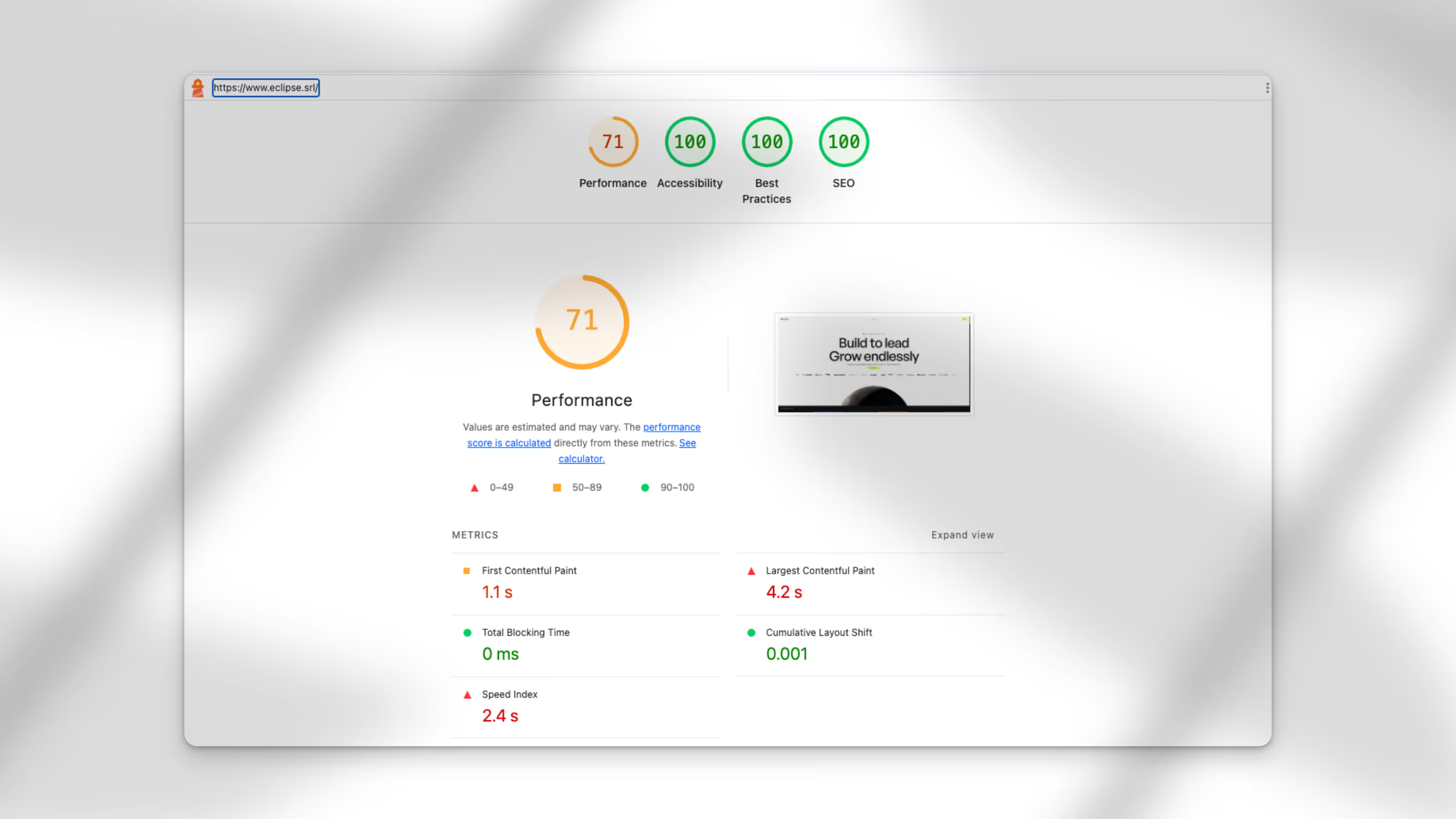
A Lighthouse score measures a specific set of technical performance metrics under specific simulated conditions. It does not measure whether a site converts. It does not measure whether a brand impression lands. It does not measure whether a user who arrives on the site leaves with confidence in the business behind it.
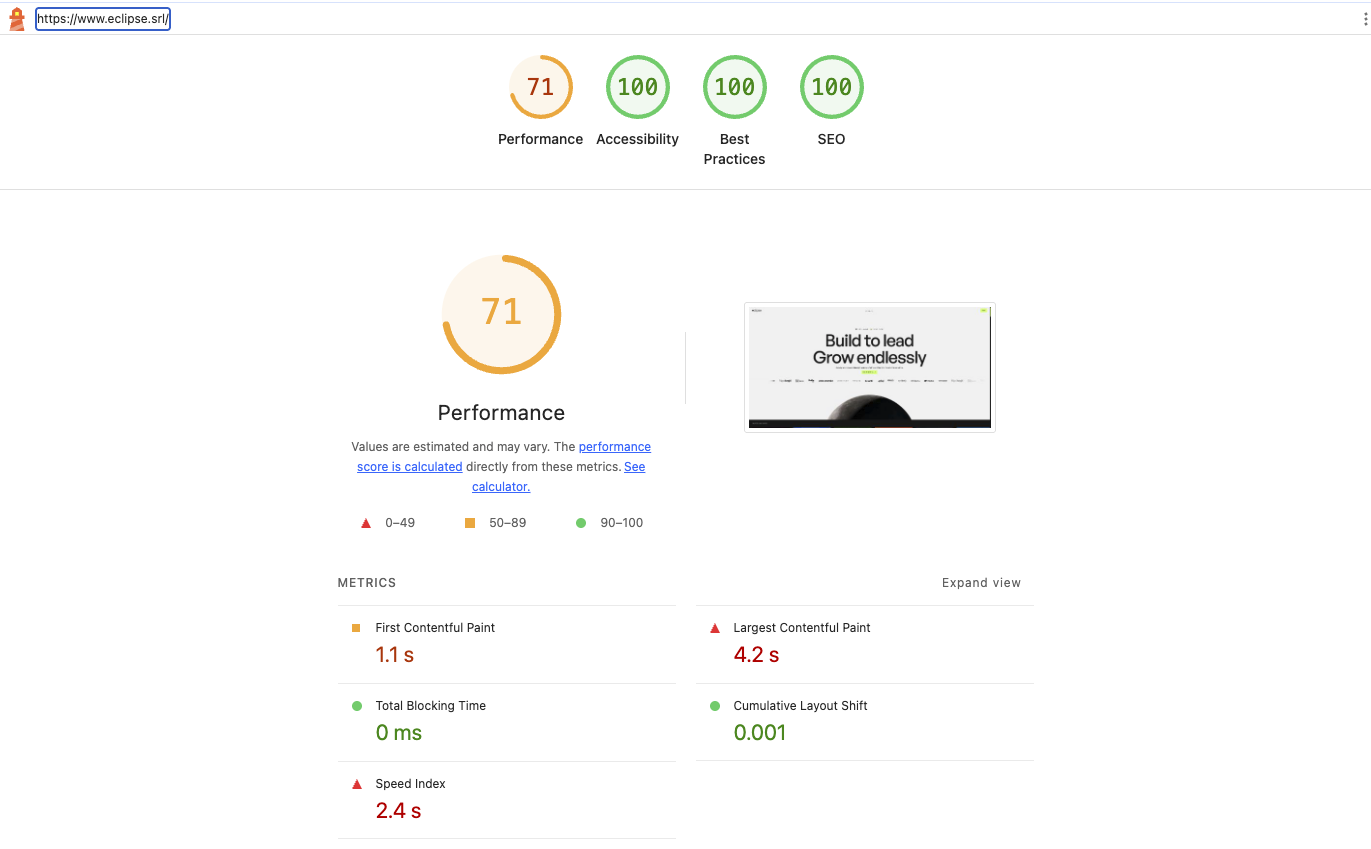
We have seen sites with scores in the mid-seventies outperform technically perfect sites on every business metric that matters. We have also seen technically perfect sites that nobody remembered five minutes after leaving them.
This is not an argument against performance. It is an argument for knowing what you are optimizing for before you start optimizing.
When speed is genuinely the priority
There are contexts where page speed is directly tied to business outcomes and should be treated as a primary concern.
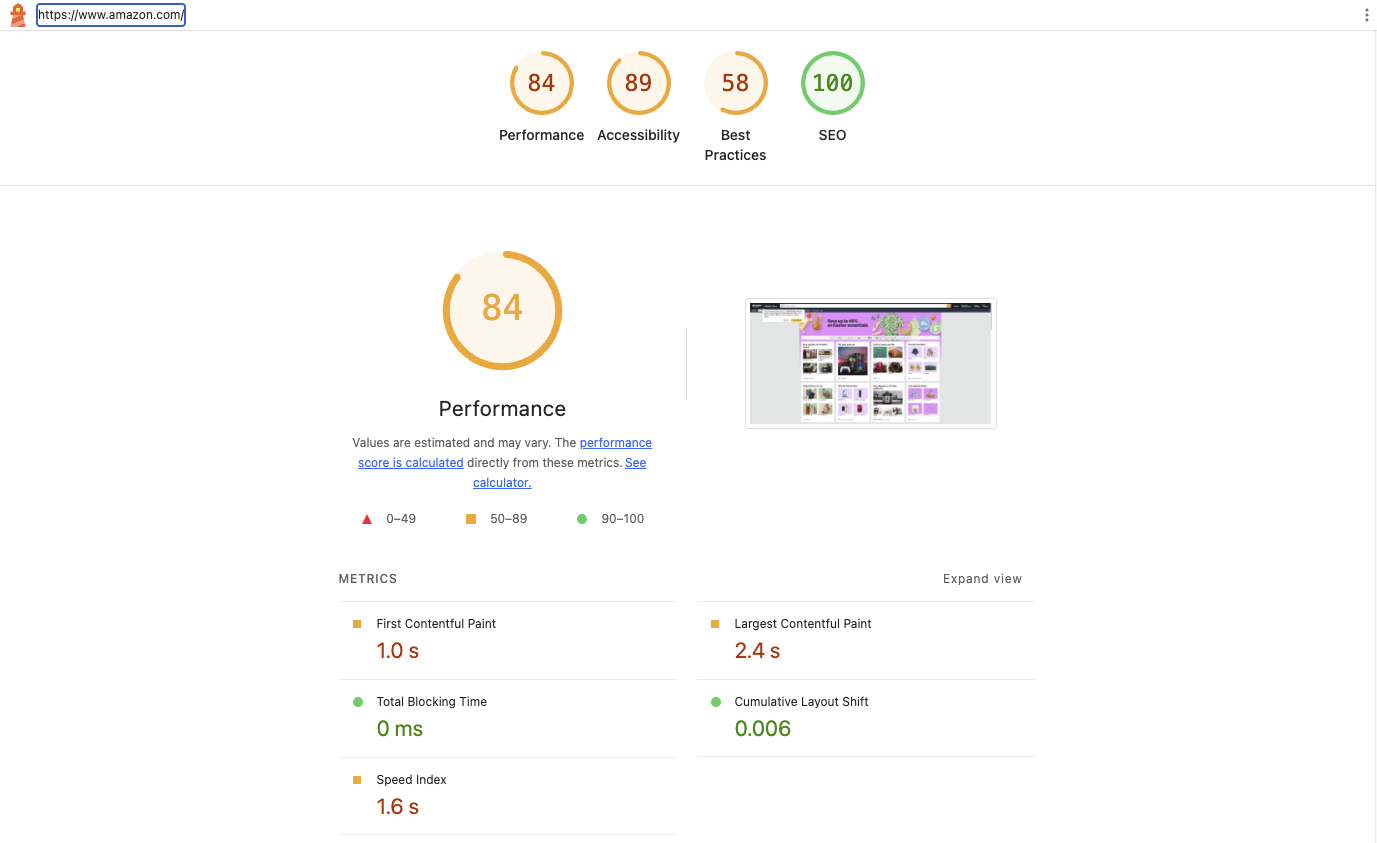
E-commerce is the clearest case. The research on load time and conversion rate in e-commerce is consistent and has been replicated across enough contexts to be treated as reliable: slower sites lose sales. The effect is not dramatic at the margin between a score of 95 and 100, but it is significant between a site that loads in under two seconds and one that takes four or five. If your revenue depends on conversion rate, page speed is a competitive variable.
High-volume content sites and news platforms face a similar dynamic. When the primary metric is pages per session and time on site, friction at load time compounds across millions of sessions into meaningful revenue impact.
Landing pages for paid campaigns are another context where speed deserves close attention. You are paying for every click. A landing page that loses users before it finishes loading is burning budget on traffic that never had a chance to convert.
In these contexts, performance optimization is not a nice-to-have. It is part of the product.
When emotional impact matters more
Brand sites, portfolio sites, sites for creative agencies, architects, luxury goods, high-consideration professional services: these are contexts where the emotional quality of the experience is the primary driver of the outcome you want.
A visitor to a luxury brand site is not making a split-second decision based on load time. They are forming an impression. That impression is shaped by the richness of the photography, the quality of the typography, the feel of the transitions, the sense that the brand behind the site has taste and intention.
Delivering that experience requires assets and interactions that carry a performance cost. A hero video, a full-bleed image sequence, a scroll-driven animation: these things are not accidents or technical debt. They are deliberate choices that serve the communication goal of the site.
Optimizing them away to chase a Lighthouse score is not a performance improvement. It is a brand damage.
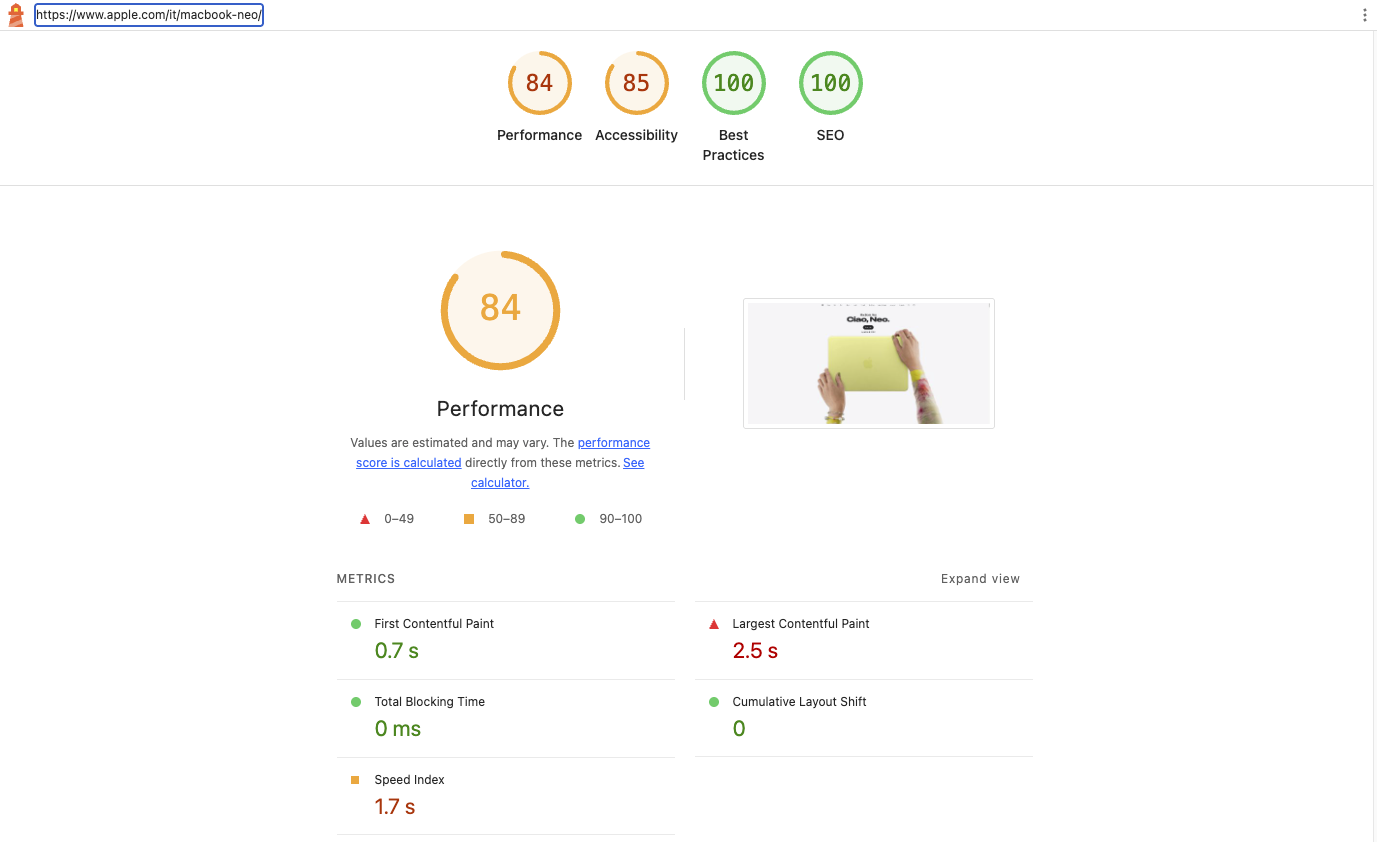
The right approach in these contexts is to optimize intelligently, lazy loading, modern image formats, efficient animation libraries, good hosting infrastructure, without stripping out the elements that make the experience what it is. The goal is the best possible experience at the best possible performance, not a perfect score on a benchmark that does not capture what the site is trying to do.
When monitoring is the right answer
There is a third category that rarely gets discussed: sites where the current performance is acceptable, not perfect, and the right investment is not optimization but ongoing monitoring.
Performance degrades over time. New content gets added, new third-party scripts get embedded, the platform updates in ways that affect rendering, the device and network landscape that your users actually represent changes. A site that performed well at launch may perform significantly worse eighteen months later without anyone noticing.
Monitoring catches this drift before it becomes a problem. Tools like Google Search Console, combined with regular Lighthouse audits and Core Web Vitals tracking in real-user data, give you an early warning system that is far more valuable than a one-time optimization sprint.
For most of our clients on ongoing subscription plans, we include performance monitoring as a standard part of what we do. Not because their sites have problems, but because problems are easier to fix when they are caught early.
The framework we actually use
When a client raises page speed, we ask three questions before recommending anything.
What is the primary goal of this site, and is load time directly connected to achieving it? What is the current real-user performance data, not just the Lighthouse score in a lab simulation? And what is the cost, in time, money, and experience quality, of the optimization being considered?
The answers to those questions determine whether we recommend a focused optimization sprint, a monitoring setup, a more selective review of specific heavy elements, or simply leaving things as they are and investing the time elsewhere.
A perfect Lighthouse score is a fine thing to have if it costs you nothing to achieve it. When it costs you the experience that makes your site worth visiting, it is a bad trade.
If you want a clear picture of where your site actually stands, get in touch and we can run a full performance and AEO audit together.



.jpeg)


.avif)




.avif)