




Why we built Automate
How it started
We did not set out to build an AI service. We set out to stop wasting time.
Over the past two years, we had been quietly integrating AI into our internal operations. Not as an experiment. As a necessity. The volume of work, the complexity of client projects, and the pace at which the tools we work with were evolving made it clear that the old way of doing things had a ceiling.
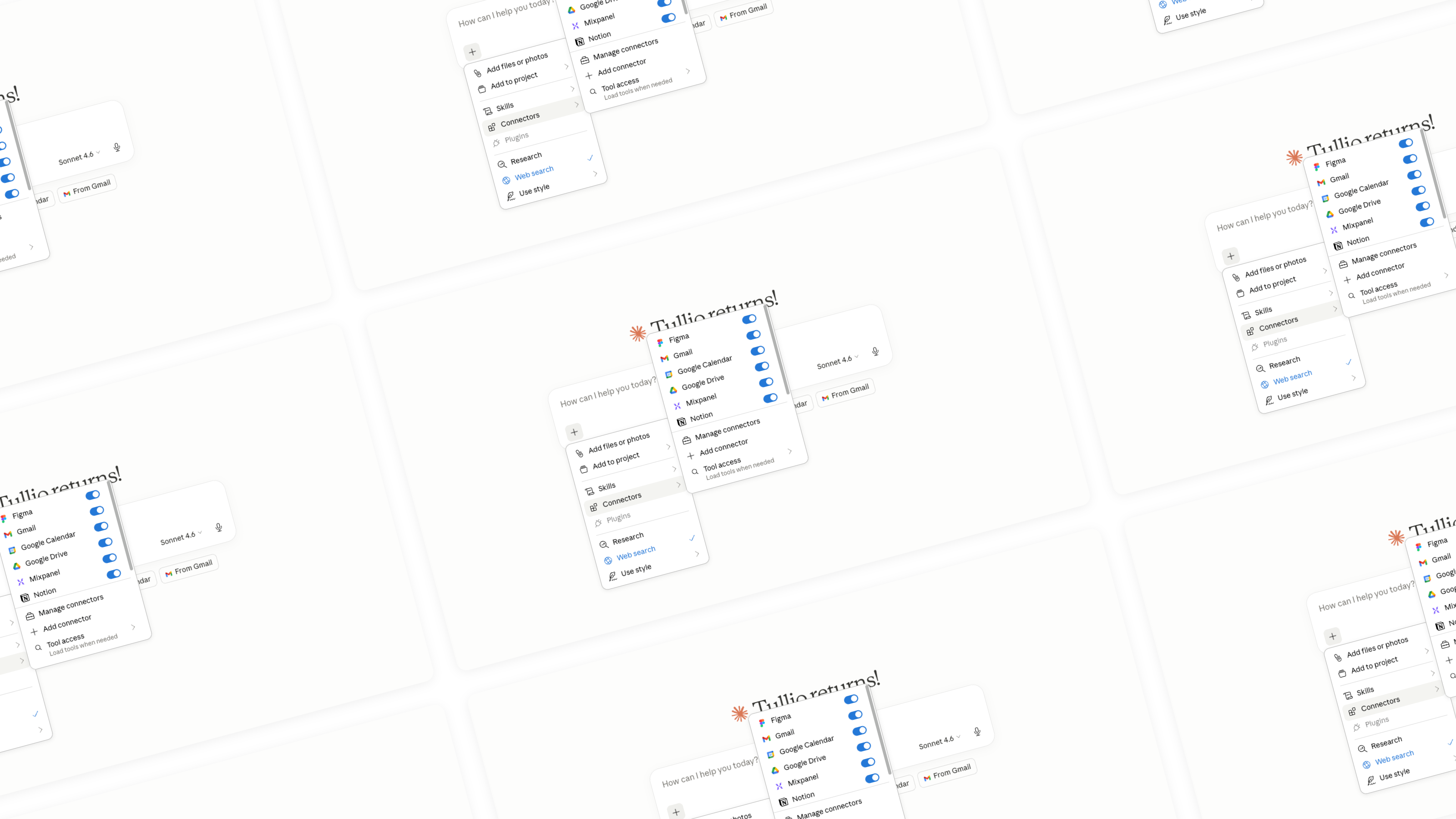
We built our own internal management system in Notion, orchestrated by Claude. We automated the repetitive parts of client onboarding, project tracking, and reporting. We connected our tools through MCP and watched entire categories of manual work disappear.
At some point, clients started asking what we were using. Then they started asking if we could build the same thing for them.
That is when Automate became a service.
What it actually is
Automate is not a chatbot. It is not a prompt library. It is not a subscription to an AI platform with a layer of consulting on top.
It is the work of mapping how a company actually operates, identifying where time is being lost to repetition, and building tools that eliminate that loss. Custom operational systems, workflow integrations, vertical software products. Everything designed around how a specific team works, not around what a generic platform can do.
The underlying technology is Claude, connected through MCP to the tools a company already uses. Notion, Google Workspace, CRMs, ERPs, custom APIs. The architecture is different for every client because every client's operation is different.
What we have learned building it for ourselves
Most automation fails for one of two reasons. Either it was designed around the technology instead of the workflow, so people find ways to avoid using it. Or it was built to solve a problem that was not actually costing the company that much time.
We made both mistakes before we got it right internally. The system we use today took several iterations. The version that works is the one that started from a brutally honest audit of where time actually goes, not from enthusiasm about what AI can theoretically do.
That audit is now the starting point for every Automate engagement. We spend time understanding the operation before we write a single line of logic. It is slower at the beginning and significantly faster at every stage after.
Who it is for
Automate is not for every company. It is for companies where a meaningful portion of the team's time goes to work that is structured, repeatable, and currently manual. Document processing, data aggregation, reporting, internal communications that follow a pattern, workflows that require pulling information from multiple sources and assembling it into something actionable.
If that description does not match your operation, we will tell you. The worst outcome for both sides is building something that solves a problem too small to matter.
Why now
The tools that make this kind of work possible have changed dramatically in the last eighteen months. What required a development team and months of custom integration a few years ago can now be built, maintained, and adjusted by a much smaller team working much faster.
That shift is not going to slow down. The companies that move now will not just be more efficient. They will have built operational infrastructure that compounds over time, while competitors are still running on manual processes.
We built Automate because we saw what it did for us. We are offering it because we are confident it can do the same for the companies we work with.
If you want to understand what this could look like for your operation, start with a call.



.jpeg)

.avif)



.avif)